The landscapes of Madinah
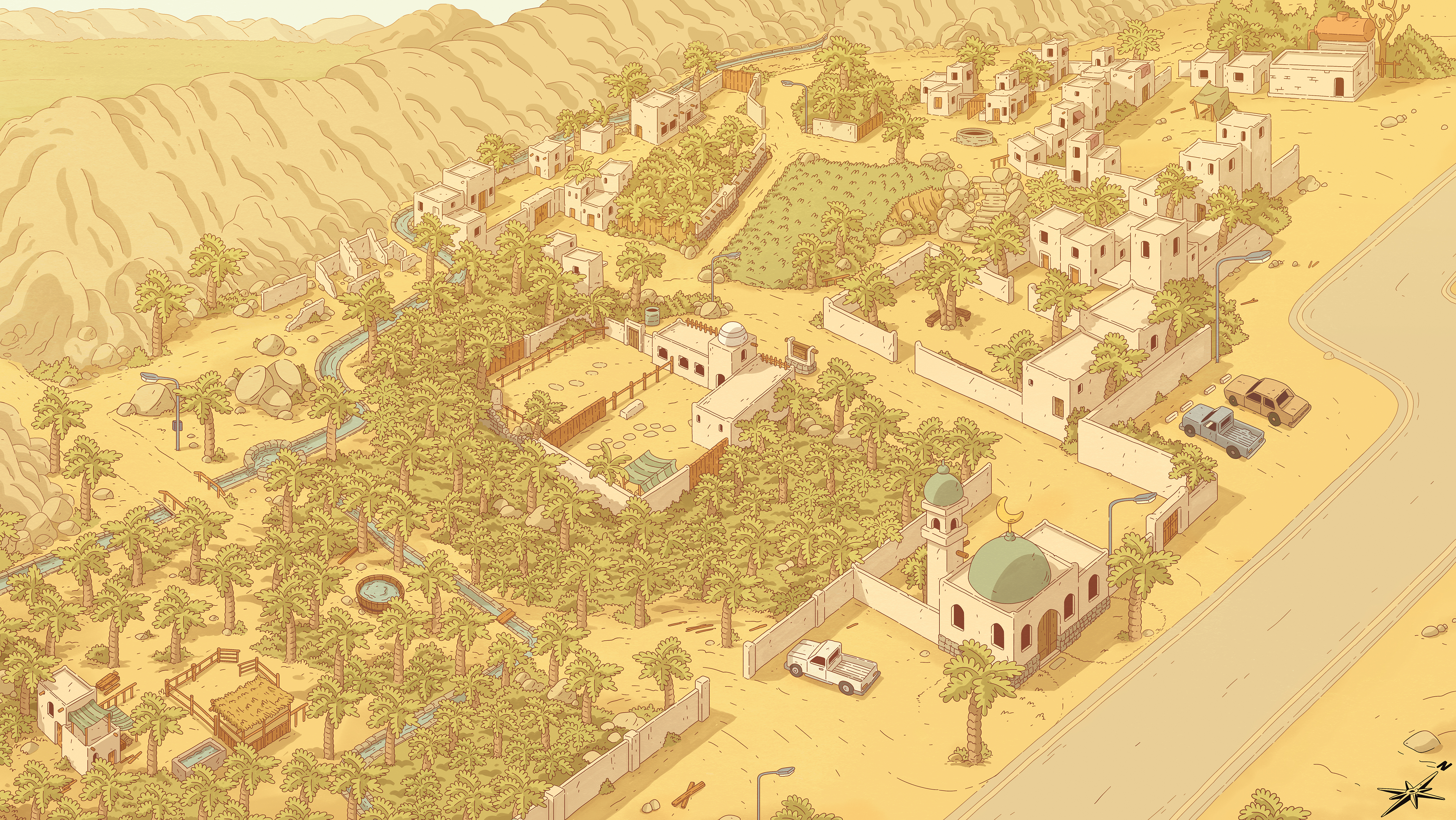
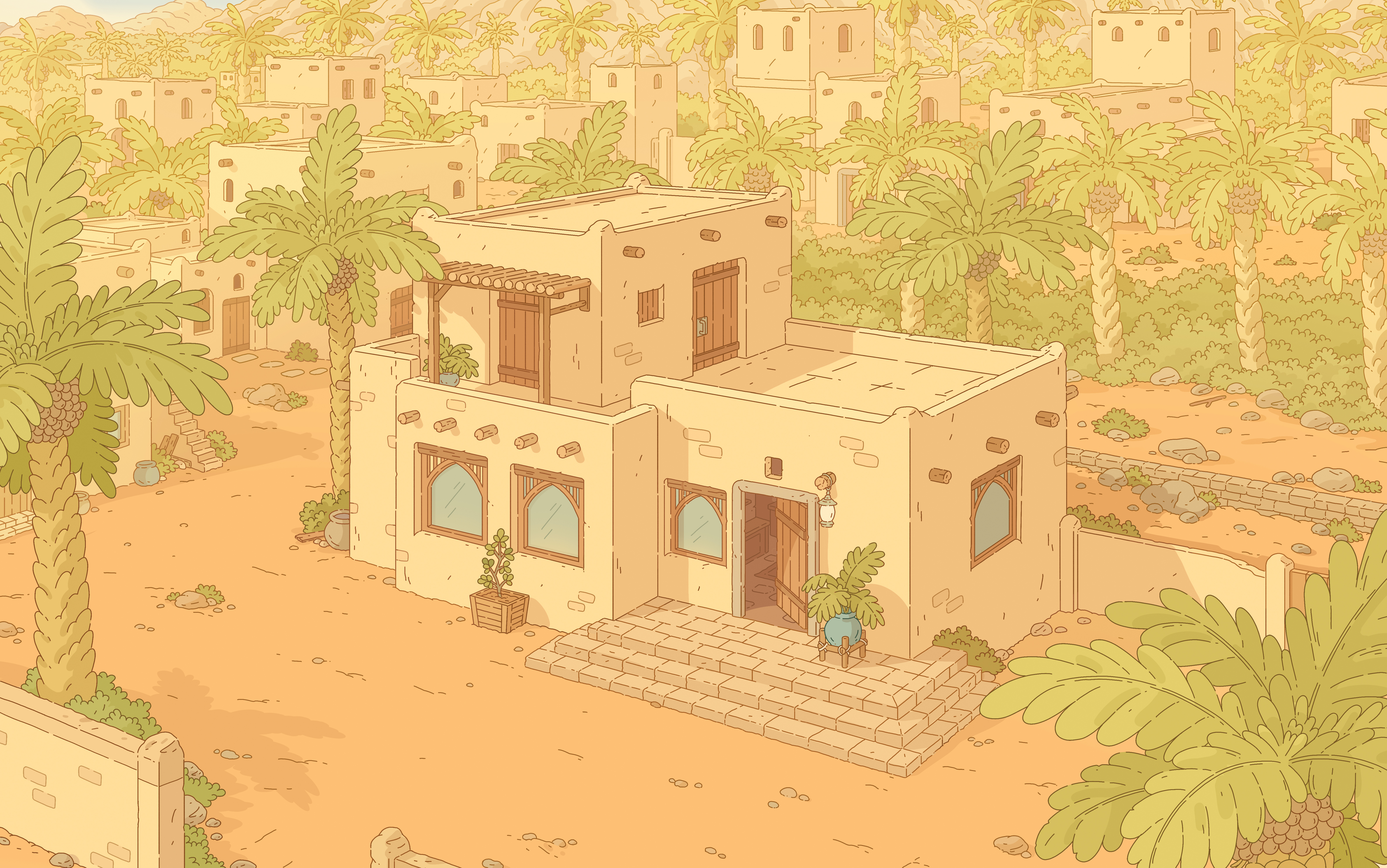
A village that does not exist. But could.
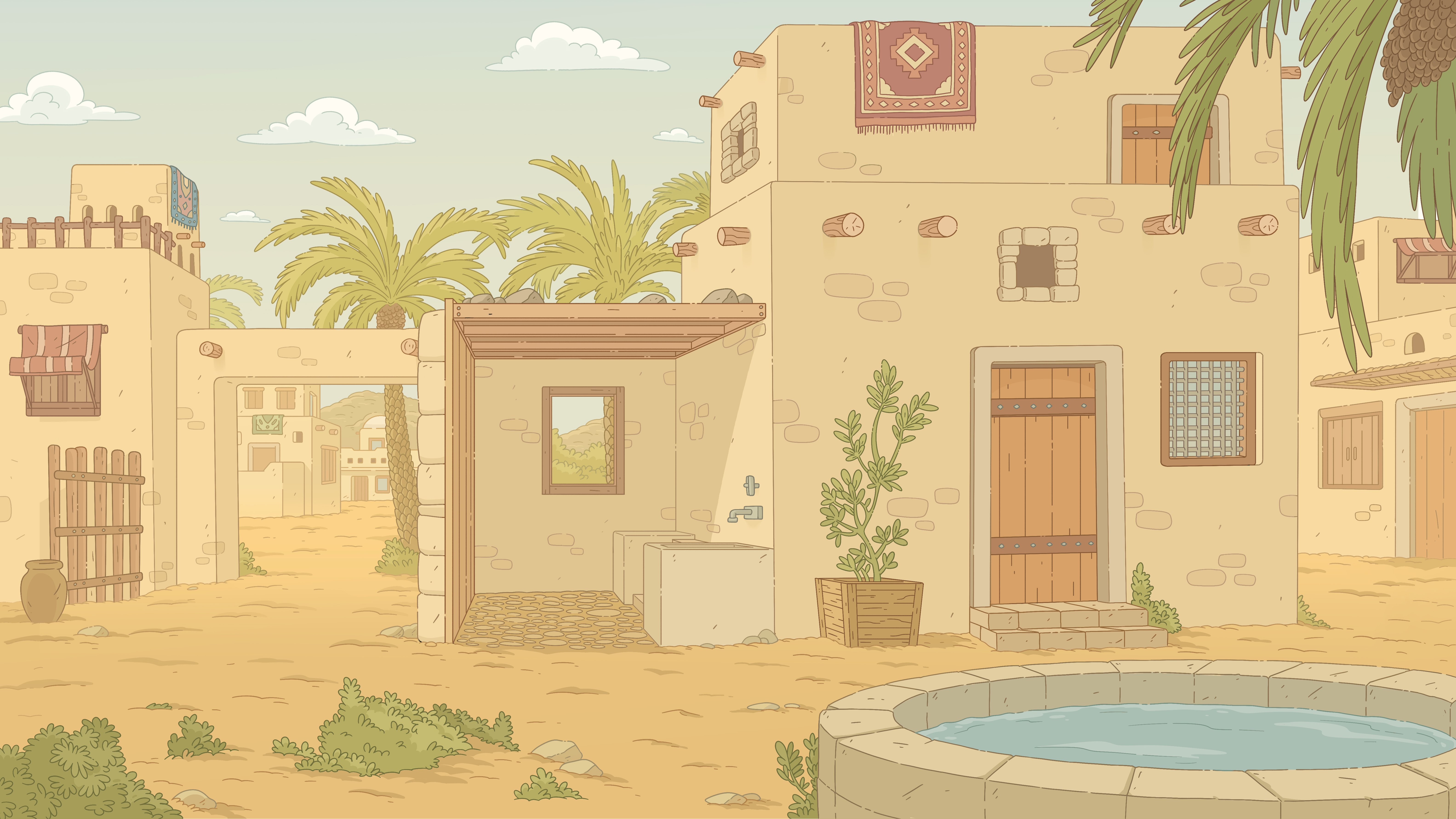
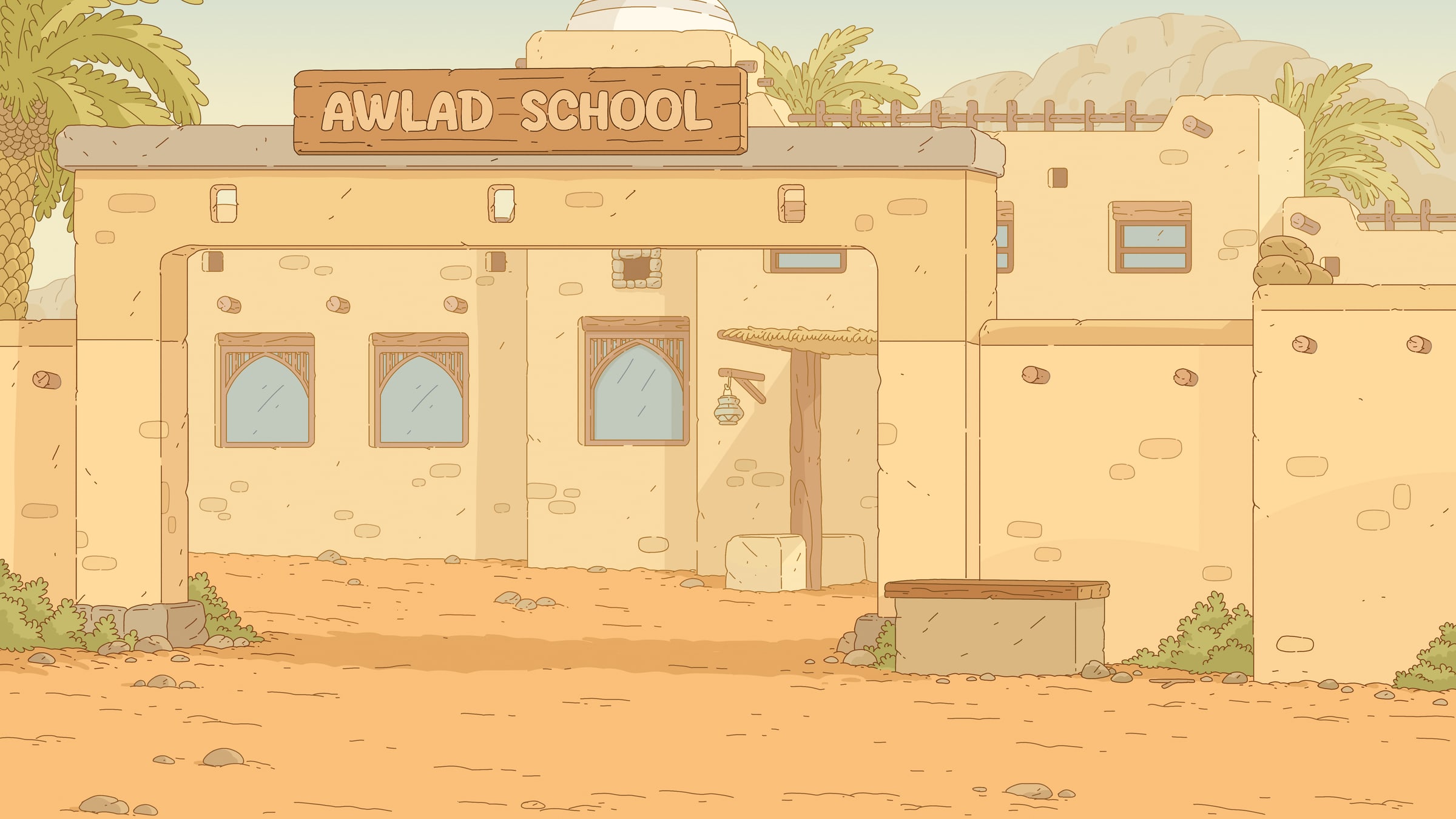
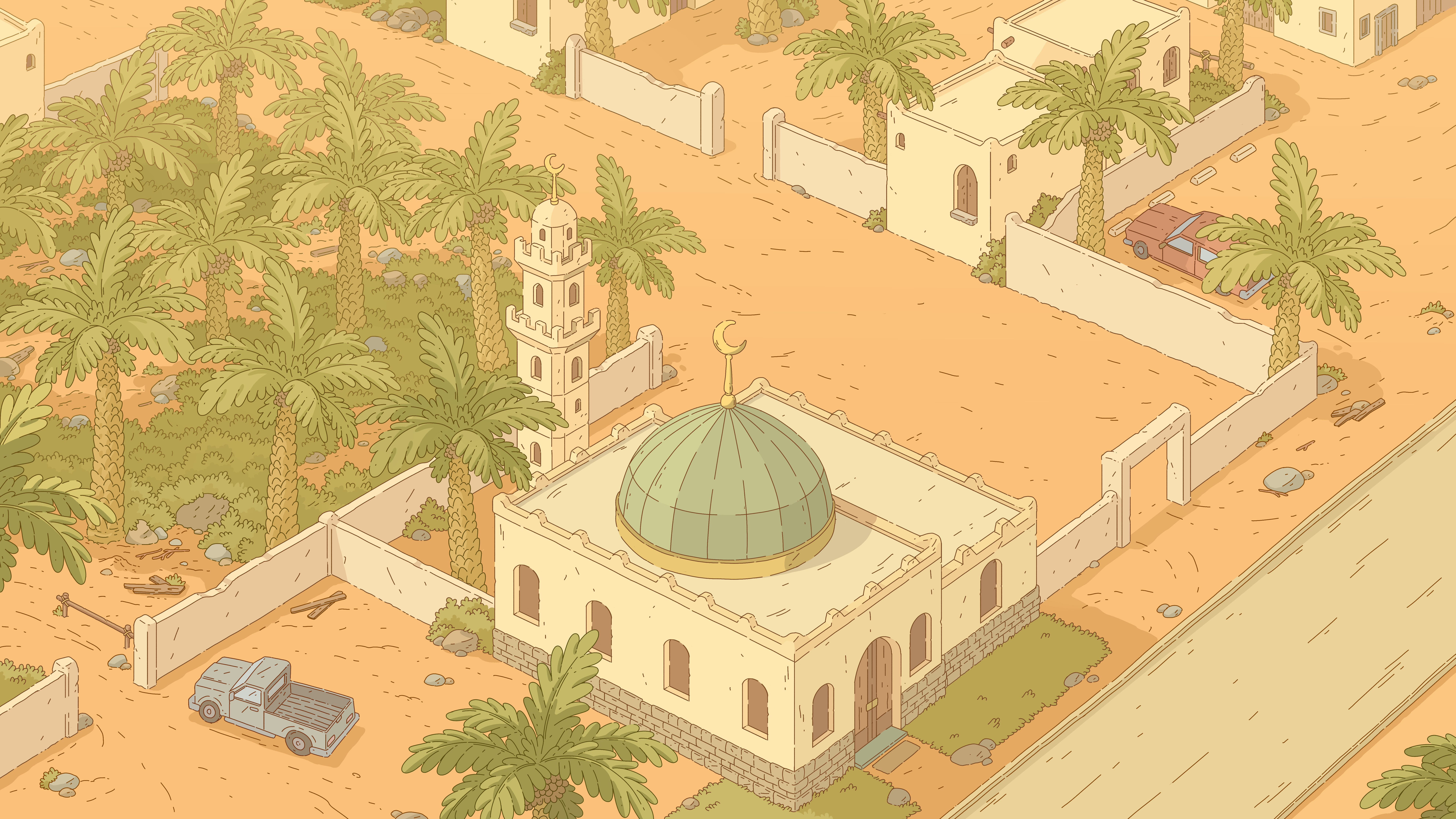
The series takes place in the highlands of Madinah, on a plateau of palm groves we designed entirely. Nothing on screen copies a real location, yet everything was documented before being drawn: the paths, irrigation, how an earthen house withstands the heat, and how the palms are planted and spaced. We wanted a place sheltered from time, but not outside it: a village you could imagine still existing somewhere, twenty minutes from the city, behind a hill nobody bothers to go around.
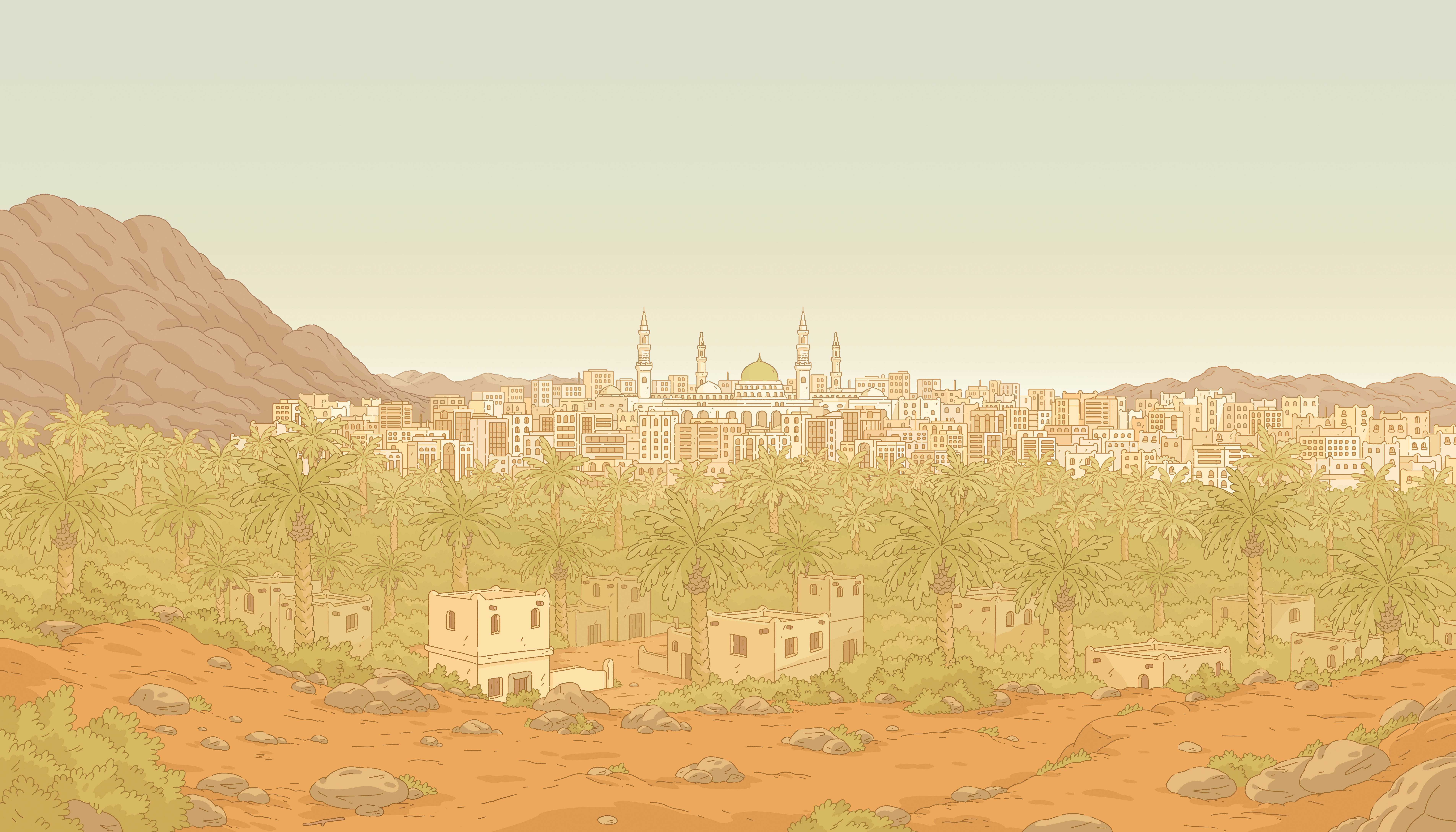
The mosque in the distance.
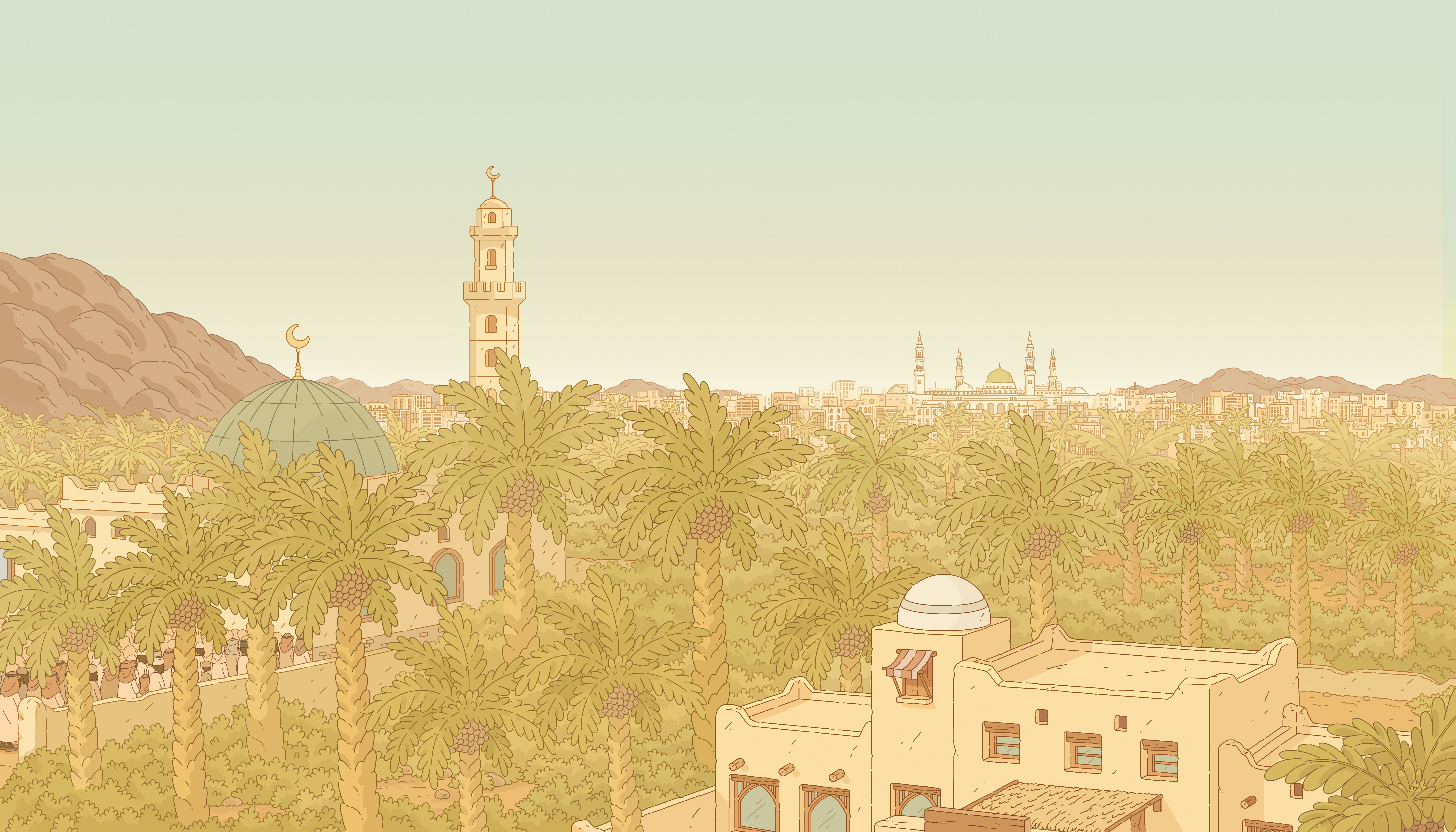
Always on the horizon is the Prophet’s Mosque ﷺ. Never in the foreground until the very last episode. Always at the end of the plateau, its minarets set against the changing sky. It works like a lighthouse. First, because it is the goal. The children sort, water, repair and argue for one reason: for this palm grove’s dates to be selected for Ramadan iftars there. Every wide shot reminds the audience what is at stake. Then, because it restores perspective. When Walad loses his temper, Karim provokes or Soufyan looks down on the others, a shot of the horizon reminds the viewer where these children stand and what such a place asks of them. It is not a devotional object placed in the scenery. It is a silent reminder.
Not a note of music.
The final consequence is the most demanding. Without music, the setting must be heard: wind in the palms, the crackle of heat, water in the channels, sandals on stone, and the call to prayer crossing the plateau and dividing the afternoon. For us, a setting is never just a background. It is half the soundtrack.