The characters
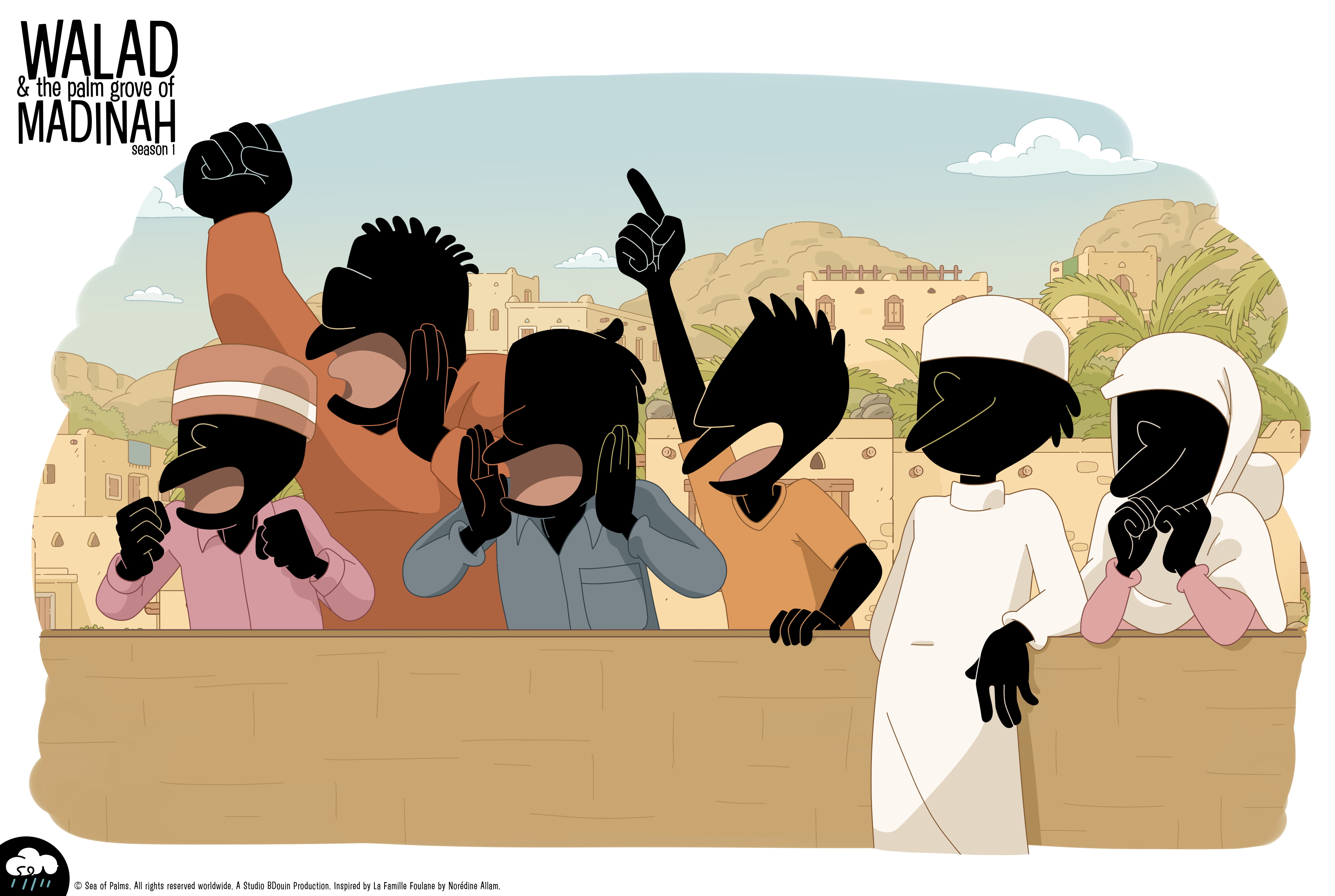
Seven children who did not choose one another.
In children’s series, a gang is usually a group of friends. Not here. Walad’s gang is a team brought together by circumstances at a summer camp in Madinah, around a promise nobody asked to keep except the boy who made it. They come from different continents and backgrounds that never cross, and they must save a palm grove’s harvest together. That is the real subject of the season, before dates and drought: what seven incompatible personalities can achieve when faced with land that will not negotiate.
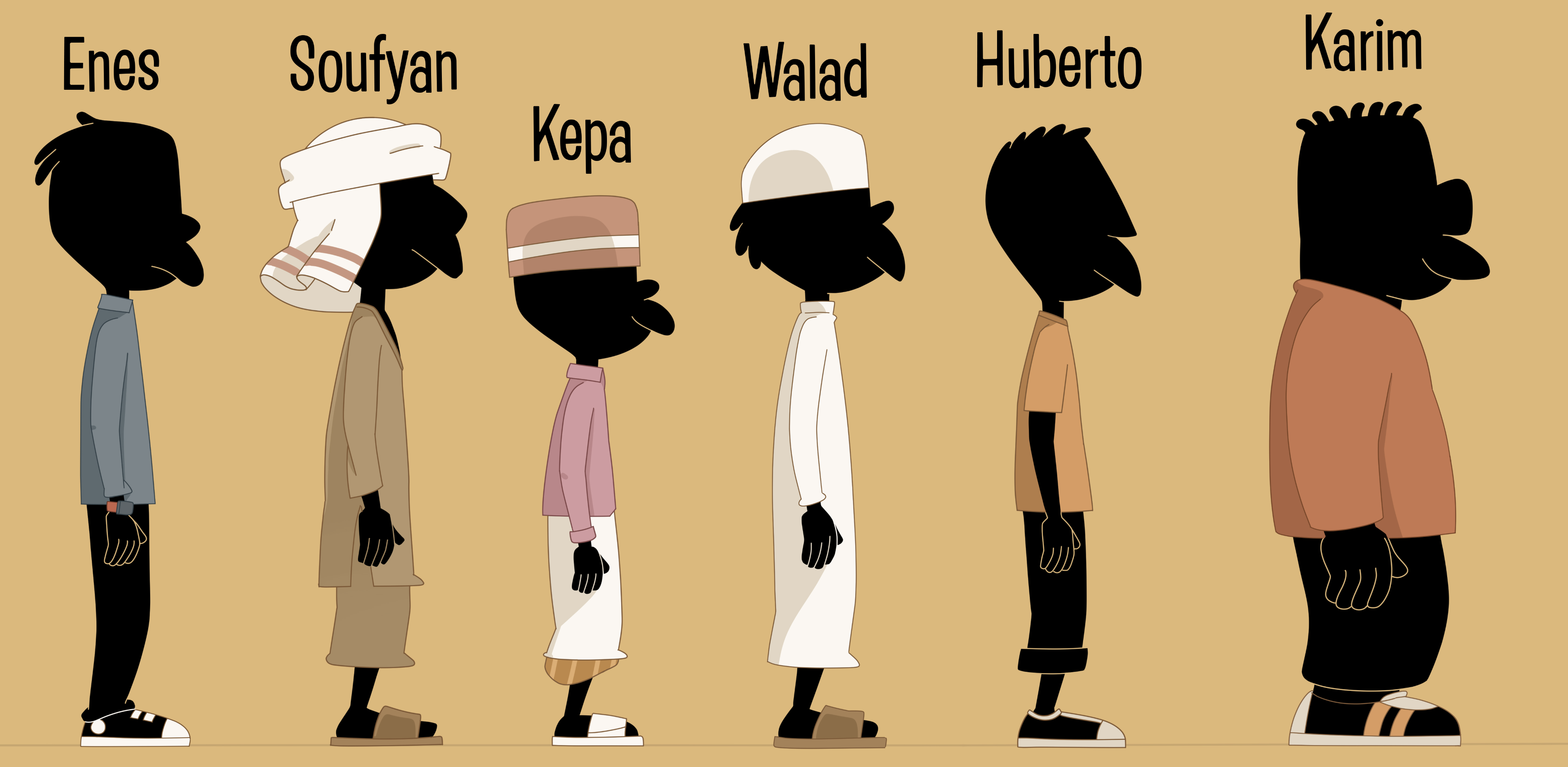
Who are they? Walad, about 10. Arriving from the West in an immaculate white qamis, with enough energy to exhaust the palm trees, he promises before he thinks and spends the season paying the price of his sincerity.
Binti, about 11. The big sister. She lets the boys wear themselves out all day, then solves the problem in five minutes with a few salvaged objects.
Kepa, about 10. The quiet Indonesian boy with an enormous water bottle. He barely speaks, sees everything and always makes the move nobody else thought of.
Karim, about 11. Street honour transplanted into the desert. He tests people before trusting them, but once he agrees to a pact, he follows it through, hands in the mud.
Enes, about 11. The connected brain, convinced every problem is an equation. Madinah is his first short circuit: you cannot download a solution to drought.
Huberto, about 11. A quiet convert, Karim’s resigned lieutenant and a dry-witted witness to the group’s disasters — brave precisely when nobody is looking.
Soufyan, about 12. The palm grove’s son, a Bedouin poet and solitary athlete. He asked nothing of these holidaying city children and makes no secret of it. He will change the most.
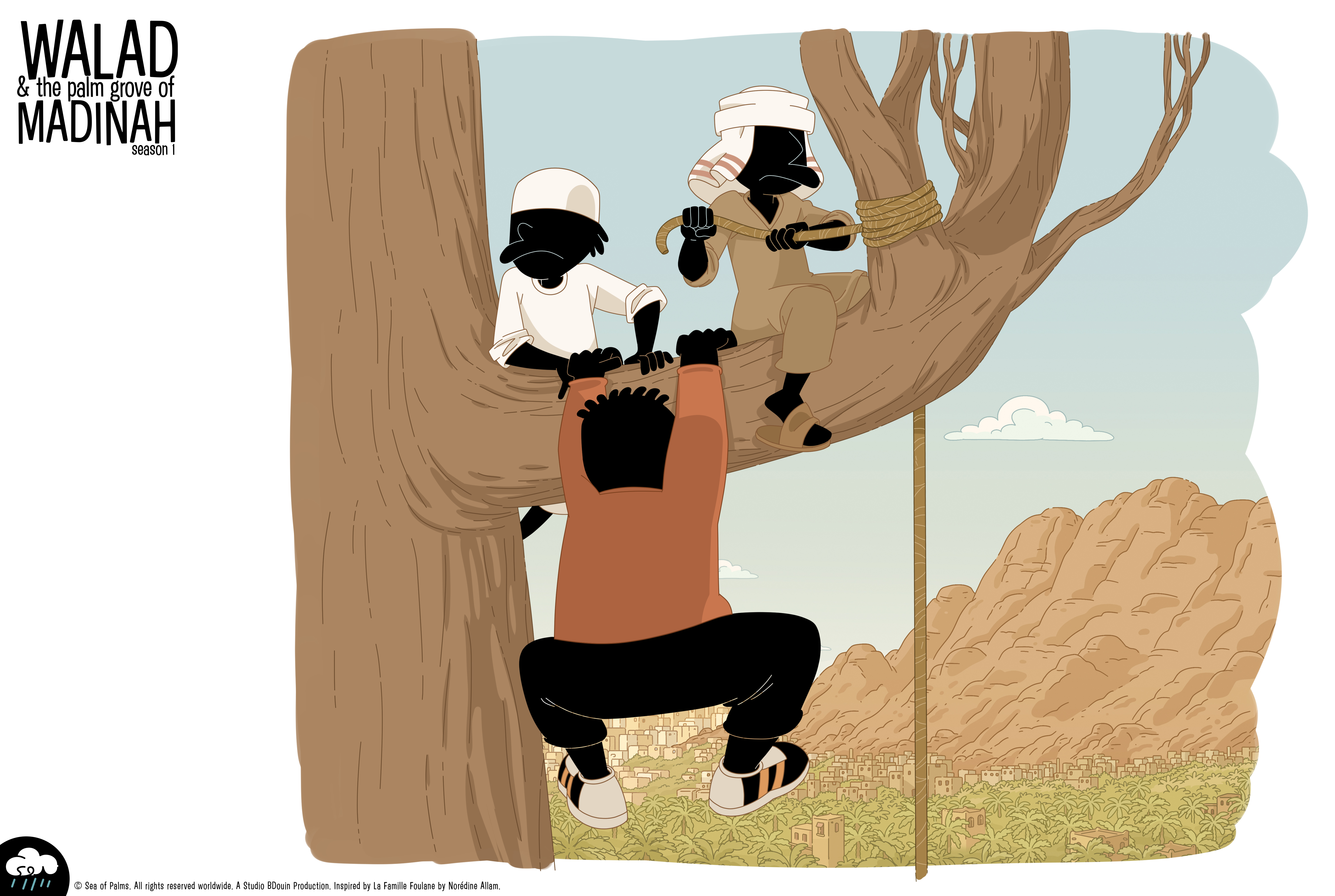
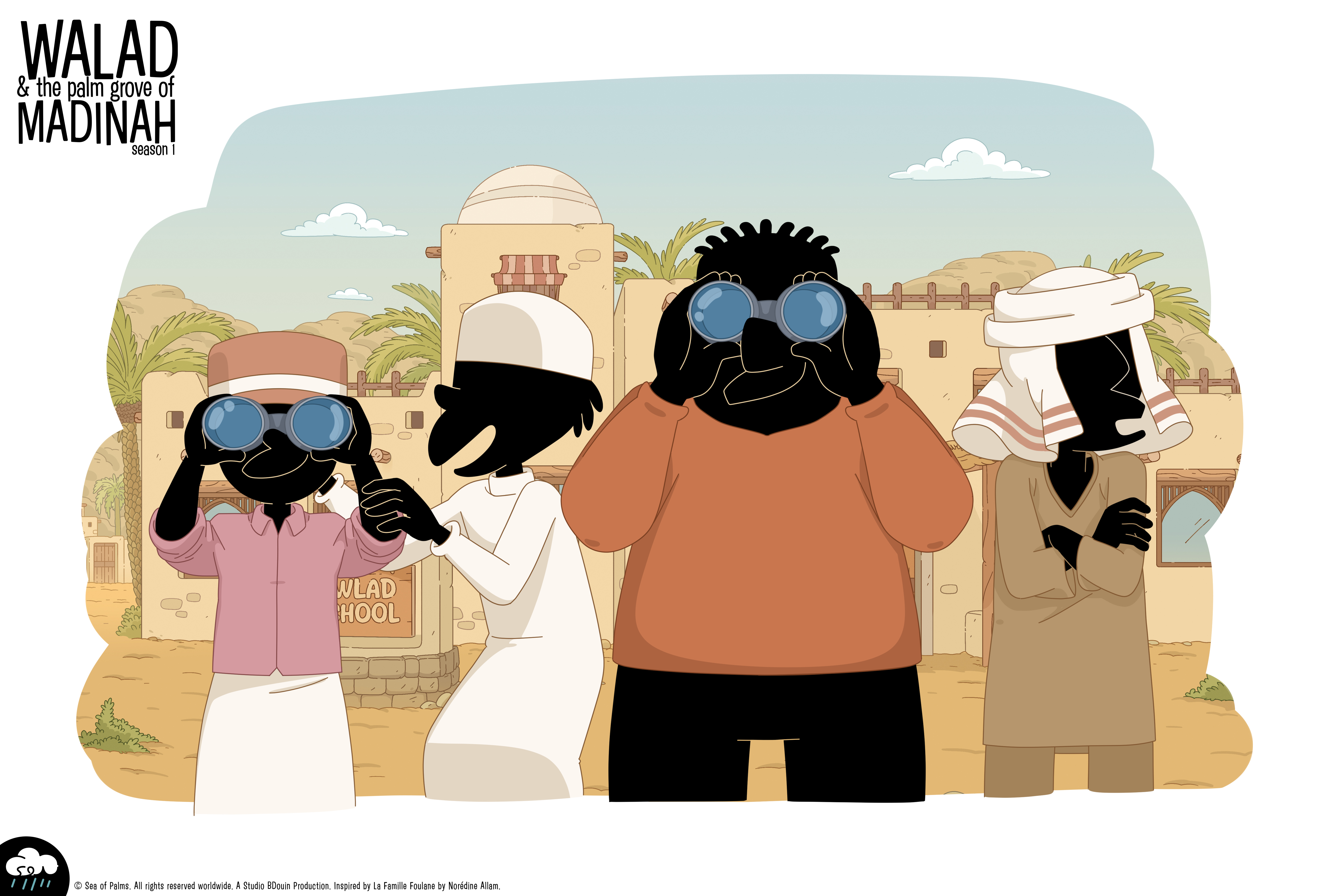
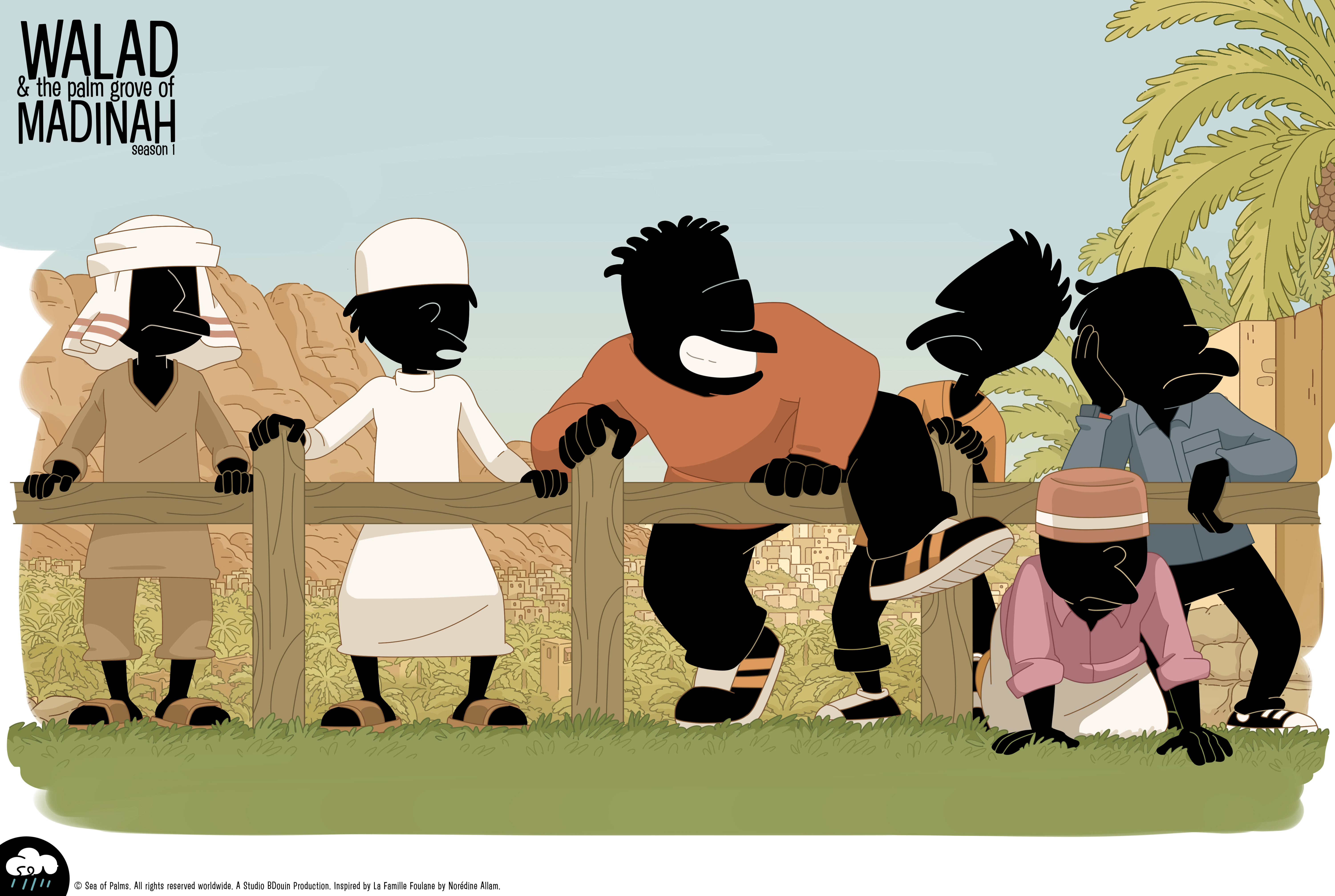
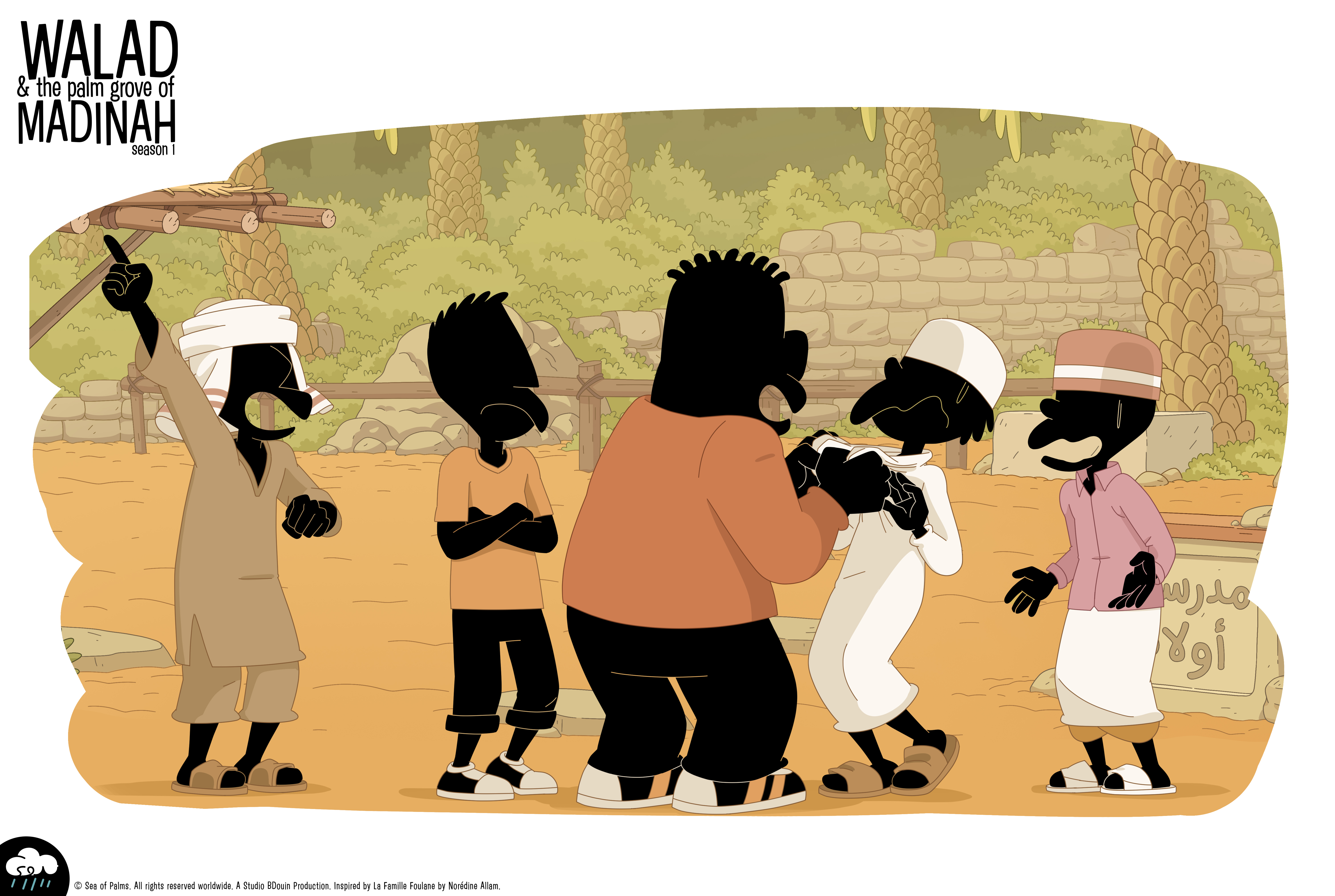
The challenge of the black semi-silhouette. Our characters have solid black faces and hair, with coloured clothes. This visual choice addresses an ethical concern but raises a difficult design question: how do you recognise one child among seven when none has facial features? Everything else must work harder: the cut, colour and length of a garment, and how it falls as the child runs. The shape of a collar, a head covering, the way a fabric is tied. An accessory always carried: an oversized water bottle, a tablet, a tool. Each element is decided once and maintained throughout the season. No detail is merely decorative: this is the vocabulary available to tell us who is there.
Seven children, one palm grove, no resemblance between them. That is precisely what makes the image readable.